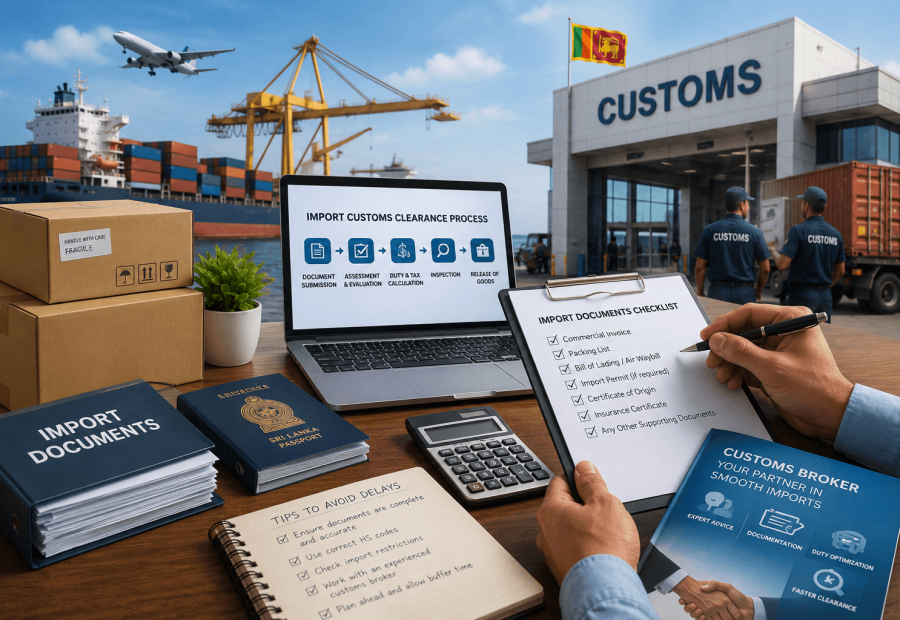
Customs clearance is a critical step in getting goods from a foreign supplier into Sri Lanka on time and without surprise costs. For small business owners and managers, understanding the process, common pitfalls, and how to work with service providers—like a customs broker or Freight Forwarding company—can save money and protect your reputation. This guide explains the essentials of import clearance, documentation you must prepare, practical tips to avoid delays, and when to hire professional Customs Clearing help.
Understanding import clearance in Sri Lanka
Import Clearance begins the moment goods arrive at a Sri Lankan port or airport and continues until the shipment is legally released to the importer. Sri Lanka’s Customs enforces tariffs, import prohibitions, and inspection rules. Whether you use sea freight to Colombo Port or Air Freight service into Katunayake, the core steps are the same: submit accurate documentation, pay any duties and taxes, and comply with inspections or permits. For small businesses, tracking timelines and categorizing goods correctly (tariff codes, HS codes) are vital to avoid unexpected charges.
Essential documentation and permits
Accurate paperwork is the backbone of efficient Import Clearance. Key documents include:
-
Commercial invoice: states value, buyer, seller, and detailed product descriptions.
-
Bill of Lading / Air Waybill: transport document from carrier; required to release cargo.
-
Packing list: itemised contents, weights, and packaging details.
-
Import declaration: submitted to Sri Lanka Customs through the ASYCUDA or online portals.
-
Certificates and permits: health certificates, phytosanitary certificates, or licences for restricted goods (applies to perishable cargo, live animal clearing and forwarding, and some food items).
Missing or inconsistent paperwork leads to holds and fines. Ensure invoice values match any declared insurance or freight charges to avoid valuation disputes during Customs Clearing.
Common causes of delays and how to avoid them
Delays hurt cash flow and customer trust. Frequent causes include incorrect HS codes, incomplete documentation, unpaid duties, and failure to obtain necessary permits. Practical tips:
-
Classify products correctly: misclassification often triggers inspections or reassessment of duties.
-
Check restricted goods lists: categories such as pharmaceuticals, certain chemicals, and regulated live animals require advance permits and specialised handling.
-
Reconcile shipment details: confirm weight, dimensions, and packing list items with the carrier’s Bill of Lading or Air Waybill.
-
Pre-arrange payments: duty and VAT payments speed release; know applicable rates for your goods.
-
Use standardized templates: creating internal checklists for commercial invoices and packing lists reduces human errors.
How Freight Forwarding and Customs Broker services help
Partnering with experienced Freight Forwarding and Customs Broker firms streamlines Import Clearance and reduces risk. These professionals manage documentation, tariff classification, duty calculations, and coordinate inspections with Sri Lanka Customs. Benefits for small businesses include:
-
Faster clearance: brokers familiar with local procedures can prioritise and expedite releases.
-
Reduced compliance risk: brokers spot missing documents and correct mis-declarations before submission.
-
Specialized handling: Freight Forwarding companies offer logistics services like cold chain for perishable cargo, or tailored solutions for automobile importers and gem & jewelry export/import needs.
-
Cost predictability: experienced brokers estimate duties and fees up front, avoiding surprise charges.
When selecting a provider, check their experience with your product type (for instance, live animal clearing and forwarding requires niche expertise), response times, and client references.
Practical checklist for importers
Before your shipment arrives, complete this short checklist:
-
Confirm HS code and estimated duties.
-
Ensure commercial invoice, packing list, and Bill of Lading/Air Waybill match.
-
Arrange necessary permits or certificates for regulated goods.
-
Decide whether to use Air Freight service or sea freight and notify your freight forwarder.
-
Pre-authorise payments for duties and Customs fees or confirm payment methods.
-
Engage a Customs Broker if you want faster, low-risk clearance.
Conclusion
Customs Clearance in Sri Lanka can be straightforward when importers prepare accurate documentation, plan for regulatory requirements, and use trusted Logistics Services. For small business owners, investing a little time in classification, paperwork, and choosing the right Freight Forwarding or Customs Clearing partner pays off through fewer delays, reduced costs, and smoother supply chains.