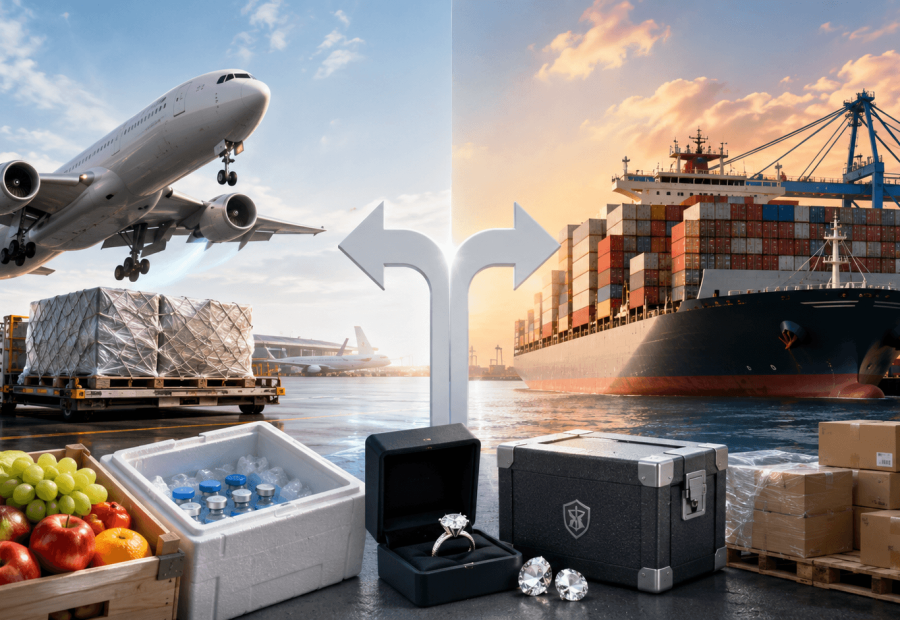
Choosing between air freight and sea freight is a key logistics decision for importers and exporters. The right choice affects cost, transit time, inventory levels, and even product quality—especially for perishable cargo or high-value goods like gem & jewelry export. This guide compares Air Freight service and sea freight across cost, speed, reliability, and special cargo handling, then gives practical selection tips for small businesses.
Cost vs speed: the basic trade-off
Sea freight generally offers the lowest cost per cubic metre, making it the preferred option for bulky, non-urgent shipments. For exporters and importers moving large volumes—like bulk tea export—sea freight keeps unit costs down and suits predictable, longer lead times.
Air Freight service is far faster but significantly more expensive. It suits time-sensitive shipments, high-value low-volume cargo (for example, some gem & jewelry export consignments), or urgent spare parts. When choosing, compare landed cost (freight + duties + insurance) against inventory carrying costs and potential sales losses from slower transit.
Transit time and schedule reliability
Air freight delivers speed: international flights move cargo within 1–3 days for most major routes. This reduces inventory lead time and works well for perishable cargo needing quick transit. Sea freight transit times vary from a few days for short regional legs to several weeks for long-haul routes. While schedules are improving, sea services are more exposed to port congestion, transshipment delays, and seasonal disruptions.
For predictable timelines—regular consolidated shipments or planned exports—sea freight can be reliable if you build buffer time into your supply chain. For urgent or just-in-time needs, choose Air Freight service to avoid stockouts.
Cargo type and special handling needs
Match the mode to the cargo:
-
Perishable cargo: Air is ideal for highly perishable or short-shelf-life products. Sea can work with refrigerated containers (reefers) if transit time plus cold chain integrity is assured. Use specialist Logistics Services and temperature-controlled packaging to protect quality.
-
High-value or sensitive cargo: Air reduces exposure time and theft risk for high-value goods. For extremely valuable items like certain gemstones, consider secure air options or specialised sea containers with added security features.
-
Bulk and heavy shipments: Sea freight wins for heavy, oversized, or bulk goods due to lower per-unit cost and container flexibility. For automobile importers shipping vehicles, roll-on/roll-off sea services are standard.
-
Live animals and regulated goods: Both modes are possible but require specific permits and handling expertise. Live animal clearing and forwarding needs experienced Freight Forwarding and Customs Broker services to meet welfare and regulatory standards.
Cost drivers and how to compare them
When comparing quotes, look beyond headline freight rates:
-
Transit time and frequency: Faster service usually costs more but reduces inventory holding costs.
-
Fuel surcharges and peak season premiums: Both modes add surcharges; air is particularly volatile.
-
Handling fees: Terminal handling, documentation, and local delivery can add materially to costs.
-
Insurance and cargo value: Higher-value cargo often requires higher insurance; short transit reduces risk.
-
Container or pallet utilisation: Inefficient packing raises per-unit costs—optimise volume to reduce rates.
Practical decision framework for small businesses
Use this simple framework to choose the right mode:
-
Define urgency and lead-time tolerance. If customers demand quick delivery or stockout costs are high, prioritise Air Freight service.
-
Calculate total landed cost. Include freight, duties, insurance, handling, and inventory carrying costs.
-
Assess cargo sensitivity. For perishables or fragile items, ensure cold chain or specialised handling capacity.
-
Consider shipment size and frequency. Larger, regular shipments favour sea freight; small, frequent shipments lean towards air or courier options.
-
Factor regulatory and clearance time. Import Clearance and Export Clearance procedures at origin and destination can add days—consult a Customs Broker early.
Illustrative example
A small tea exporter debating modes: sending a 1-tonne sample to an overseas buyer by air costs more per kilo but secures a quick sale and feedback. For a full 20-tonne order, sea freight with a reefer container reduces costs and, with good packaging and a reputable Freight Forwarding partner, preserves tea quality during the longer transit.
Final tips when booking
-
Get quotes from multiple providers and compare on total landed cost.
-
Ask about door-to-door options and whether the provider handles Import Clearance and Customs Clearing.
-
For perishable cargo or live animals, confirm temperature monitoring, contingency plans, and relevant certificates ahead of shipment.
-
Use consolidation for small shipments to get sea freight pricing where time allows.
Choosing between Air Freight and sea freight is a balance between cost, speed, and cargo requirements. Small business owners benefit from clear cost comparisons, understanding cargo sensitivity, and working with reliable Logistics Services and Customs Broker partners to ensure smooth Import Clearance and Export Clearance.